

Porcelain Mastery: The Precision Techniques of Alice Reina
Updated: Jul 9
In the world of Italian handmade ceramic and porcelain, precision in language reflects precision in craft. While “ceramic” is often used broadly to describe any object made from clay and fired in a kiln, porcelain stands apart as its most refined form.
Porcelain is made from kaolin clay and fired at much higher temperatures than other ceramics. The result is a material that’s denser, more translucent, and far more delicate to work with—yet its finish is smooth, luminous, and incredibly strong. Unlike stoneware or earthenware, porcelain resists absorbing moisture and reveals light through its body.
This material distinction is crucial when we look at the work of Alice Reina, the founder of Biancodichina. She works exclusively in porcelain. Her objects are born of time, slowness, and a radical attention to process—offering a profound example of how traditional techniques can live beautifully in a contemporary context.

For more on how Italian ceramics and porcelain differ in heritage and practice, see Handmade Italian Ceramics and Porcelain: Differences, Heritage, and Sustainable Design.
Slab-Built Porcelain: A Delicate Architecture
One of the defining techniques of Alice Reina’s work is called "lavorazione a lastra", or slab building. It’s a traditional method where porcelain is rolled into thin sheets—only 2mm thick—and then shaped by hand, with no moulds, no mechanical aids, and no safety net.
“When porcelain is this fine, every touch matters. One wrong gesture and the structure could tear—there’s no going back.”
Rolling out porcelain into ultra-thin sheets as part of the lavorazione a lastra process. Cutting geometric shapes from a porcelain sheet by hand. Lifting a delicate porcelain slab after rolling to an even 2mm thickness.
Rolling out porcelain into ultra-thin sheets as part of the lavorazione a lastra process. Cutting geometric shapes from a porcelain sheet by hand. Lifting a delicate porcelain slab after rolling to an even 2mm thickness.
Because the porcelain is so soft at this stage, it demands not just technical skill but also patience and intuition. The material dictates the pace. Each movement is calculated to avoid stress on the fragile structure. The resulting forms have an architectural yet organic quality—almost paper-like in their visual lightness.
Colore in Pasta: Colour at the Core
In addition to her mastery of form, Alice Reina is known for her distinctive approach to colour, which she achieves through a technique called "colore in pasta". Unlike traditional ceramics that are glazed after firing, this method involves tinting the porcelain body itself—so that colour becomes embedded, not applied.
It starts with drying the raw white porcelain to calculate its true weight. Then, using mineral pigments, Alice carefully blends in exact percentages to achieve specific hues. Over the years, she has developed a library of more than 100 colours and continues to expand it through ongoing testing and experimentation.

The pigments are mixed into a smooth slip, passed through fine sieves to eliminate air and particles, and poured onto plaster slabs that absorb excess moisture. The rehydrated, coloured porcelain is then kneaded by hand to eliminate bubbles, leaving a flawless, pigmented clay ready to shape.
“There’s no glaze. No coating. The colour is inside the clay—it lives in the material.”

Much like Alice, artists such as Bodil Manz craft translucent cylinders that blur the line between object and light-filled space. Her work, celebrated for its architectural precision and quiet minimalism, offers a parallel exploration of porcelain’s potential.
Read more in Ceramic Review: “The Extraordinary in the Ordinary”.
A Sustainable Philosophy in Porcelain
Alice’s studio ethos is grounded in slow production and sustainable making. She works in small batches, reclaiming and rehydrating every offcut of porcelain. No material is wasted. The colore in pasta technique also removes the need for chemical glazes, reducing waste and reinforcing the purity of the final form.
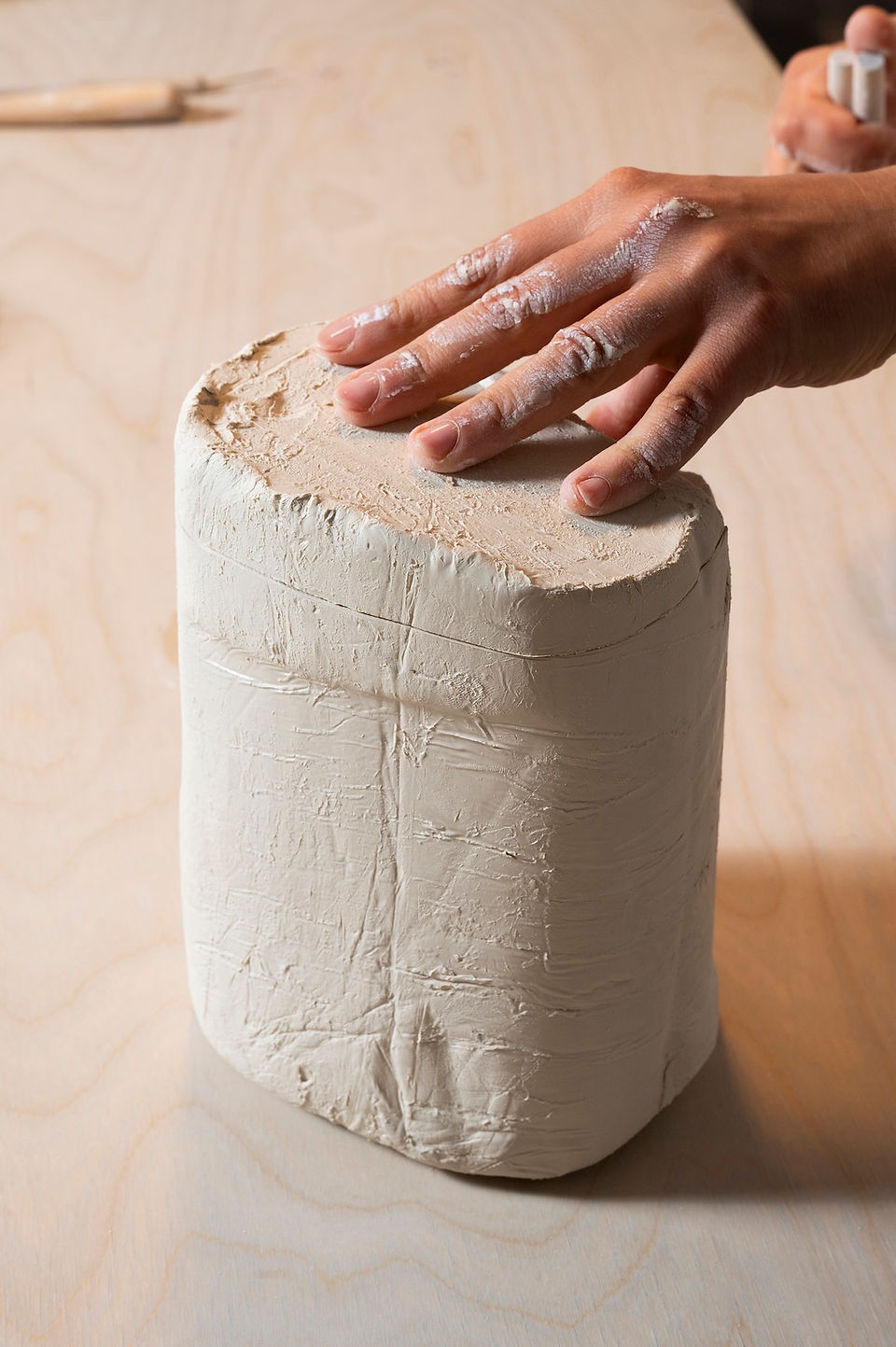
Hands lifting a cleanly sliced section of porcelain, ready for rolling. 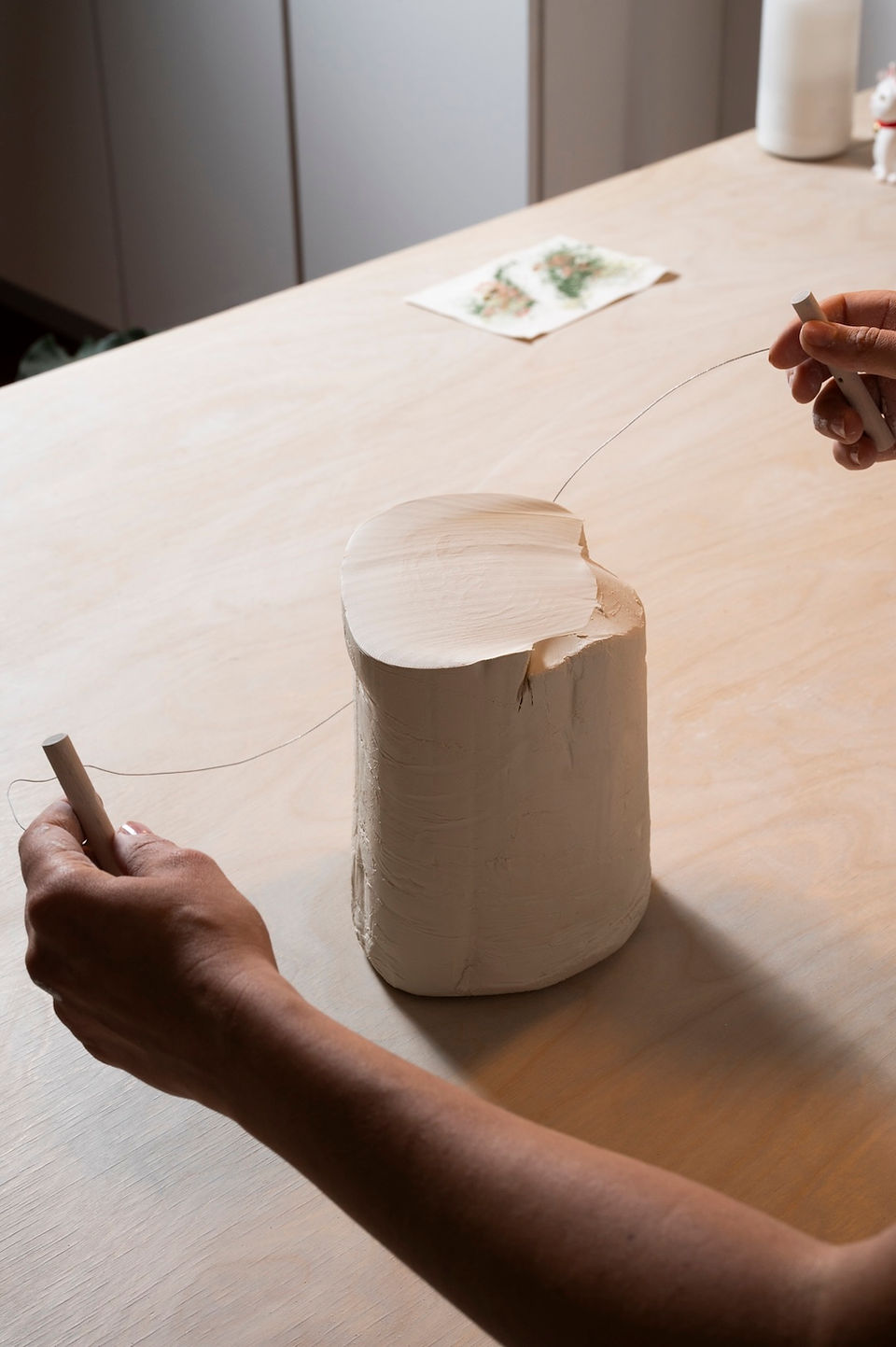
Alice slicing a porcelain block with a cutting wire, beginning the slab-building process. 
Portrait of Alice Reina in her studio, working quietly with a block of porcelain.
Alice slicing a porcelain block with a cutting wire, beginning the slab-building process.
This kind of design doesn’t chase trends or timelines. It asks for time—and gives timelessness in return. For discerning collectors, Alice Reina’s work represents everything they seek: meaningful design, historic continuity, and aesthetic restraint. Her work is not just decor—it’s a quiet act of devotion to material and form.
“I don’t want the work to shout. I want it to be still. You have to lean in to understand it.” — Alice Reina
To dive deeper into Alice’s story and philosophy, see The Soul of Handcrafted Porcelain: Alice Reina’s Journey.
Explore More
To receive first access to this drop, join our circle.
Read more stories like this in the Avant Crafts Journal.

