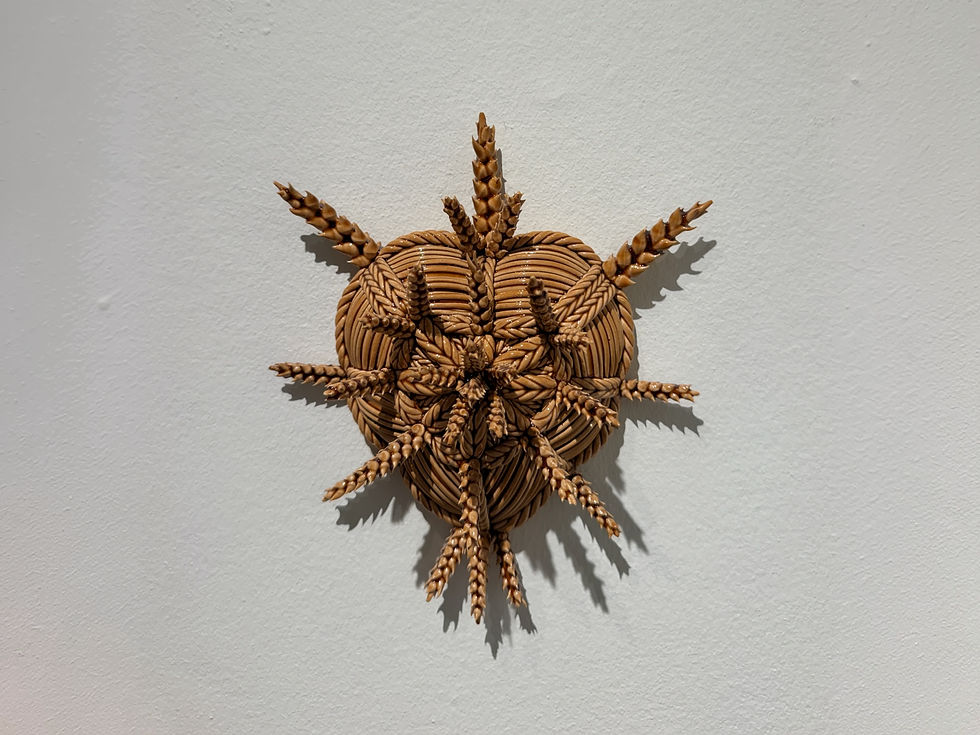
Ceramic Art London 2026. New Perspectives on Contemporary Ceramic Practice
Text: Valeria Zerbo and Amalia Di Lanno
Photography: Amalia Di Lanno
A few weeks after visiting Ceramic Art London 2026, we are reflecting on our experience of the fair and on the evolving landscape of contemporary ceramic practice it brought together. Curated by the Craft Potters Association of Great Britain, Ceramic Art London remains one of the leading platforms dedicated to contemporary ceramics in the UK.
Recognised internationally for its focus on studio ceramics, the fair brings together established makers, independent studios, and emerging practitioners working across functional, sculptural, and experimental approaches to clay. It creates a space where craftsmanship, technical mastery, and contemporary artistic research operate in direct dialogue.
What distinguishes Ceramic Art London is its ability to present ceramics beyond decorative language alone. Across the fair, clay becomes architecture, memory, texture, gesture, and structure — reflecting the increasingly fluid relationship between contemporary craft, collectible design, and artistic practice.
The 2026 edition highlighted the diversity of contemporary ceramic expression today: from works rooted in historical techniques and regional traditions to practices pushing the material toward conceptual and sculptural territories.
Rather than documenting the fair in its entirety, we chose to focus on some practices that stayed with us — works that opened particularly compelling conversations around materiality, process, and the evolving language of contemporary ceramics.
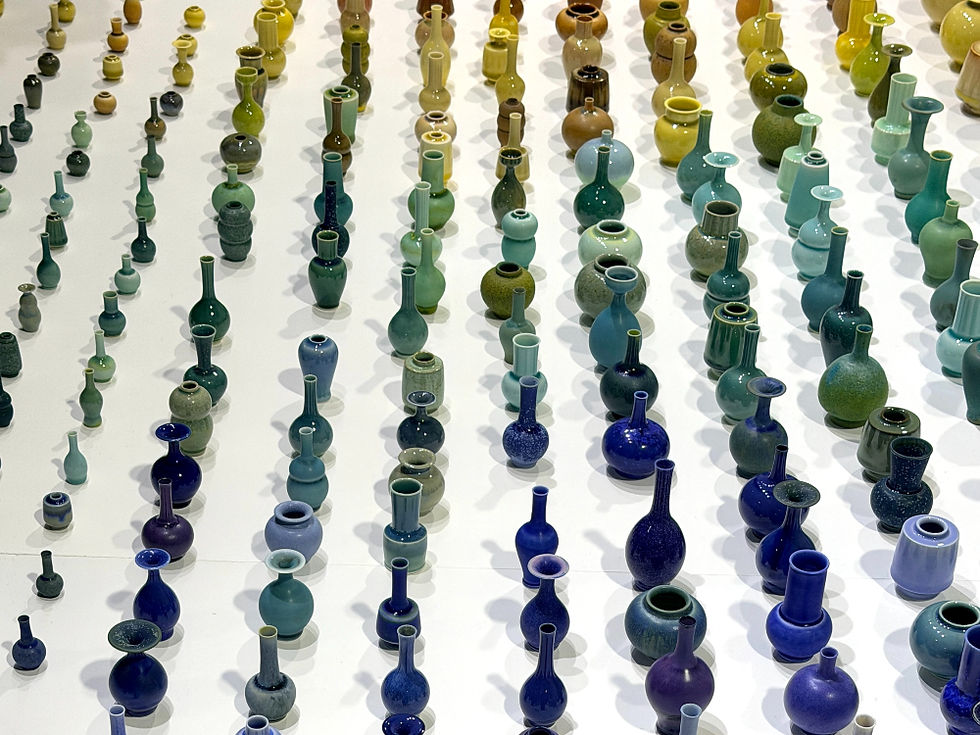
The miniature vessels of Yuta Segawa immediately captured our attention. Working at an almost impossibly small scale, Segawa transforms miniature pottery into a precise exploration of form, repetition, and technical mastery. Individually thrown by hand, his vessels reveal an extraordinary balance between discipline, delicacy, and experimentation.
Toni Losey explores the intricate structures and rhythms found in nature through richly textured sculptural ceramics. Drawing inspiration from root systems, stems, leaves, and organic growth patterns, her works evoke transformation, impermanence, and renewal. Constructed through interconnected wheel-thrown and hand-built elements, her sculptures possess a remarkable tactile presence, where light and shadow become integral parts of the composition.
The work of Olga Siruk stood out for its vivid dialogue between folklore, mythology, and contemporary form. Her biomorphic sculptures combine layered graphic surfaces with hand-built structures, drawing from Russian folklore, avant-garde aesthetics, and ritual symbolism. The resulting pieces feel simultaneously ancient and contemporary — playful yet deeply symbolic.
Left: Ceramic work by Tony Losey. Right: Ceramic work by Olga Siruk. Ph. Amalia Di Lanno
In Lisa Biris’ work, the natural world becomes less a direct reference and more a method of construction. Her sculptural vessels feel grown rather than designed, shaped through an intuitive process that prioritises rhythm, movement, and tactility. Every textured detail is patiently added by hand, resulting in surfaces that invite close observation and slow engagement.
Lara De Sio approaches ceramics through erosion, time, and material unpredictability. Her raku-fired forms balance geometric clarity with weathered, almost archaeological surfaces. Marks produced through firing, abrasion, and polishing become traces of process rather than decoration. Living in Venice, surrounded by stone altered by water and time, informs a practice deeply connected to transformation and permanence.
Left: Ceramic work by Lisa Biris. Right: Ceramic work by Lara De Sio. Ph. Amalia Di Lanno
Material experience lies at the centre of Soyeon Gim’s sculptural objects. Rather than focusing on utility, her wheel-thrown and carved forms emphasise weight, asymmetry, and touch. The works encourage physical awareness, asking viewers to experience clay not only visually but also through an imagined tactile relationship with the object.
A more expressive and urban energy defines the work of Sung Jin Kim. Drawing from graffiti culture and everyday visual observations, his ceramic compositions combine spontaneity with personal storytelling. The possibility of rearranging and reconfiguring elements introduces a sense of movement and instability, allowing each installation to shift in atmosphere and meaning.
Left: Ceramic work by Soyeon Gim. Right: Ceramic work by Sung Jin Kim. Ph. Amalia Di Lanno
In contrast, Paul James' work focuses on the simplicity of the raw material, revealing the natural beauty and refinement of the clay body. There is a purity to the forms that are often dissected and reassembled creating movement and seams running through the work. The final stages of sealing, waxing and polishing brings the natural surface to life.
Ella Porter’s interdisciplinary practice moves fluidly between ceramics, painting, and mixed media. Informed by historical artefacts, landscape and architecture, Ella creates works, which investigate the interchangeable languages of surface and form, exploring ideas surrounding the mark of the maker, temporality, trace and place.
A quieter rhythm emerges in Mizuyo Yamashita’s meditative still life compositions. Her arrangements of ceramic forms explore balance and harmony through proportion, spacing, and repetition. Inspired equally by natural forms and everyday objects, the works exist somewhere between sculpture and domestic presence, creating moments of calm contemplation.
Elaine Sheppard Boly creates sculptural ceramic forms and wall-based compositions that combine porcelain and stoneware through layering, colour, and hand-built processes. Working across throwing, hand-building, slips, and glazes, her practice brings together individual elements into narrative arrangements that evoke memory, place, and human interaction with the natural world. Her recent works explore the shifting relationship between landscape and human presence, inviting viewers to form their own associations and emotional readings through texture, composition, and form.
Top left: Ceramic work by Paul James. Top right: Ceramic work by Ella Porter. Below left: Ceramic work by Mizuyo Yamashita. Below right: Ceramic work by Elaine Sheppard-Bolton.Ph. Amalia Di Lanno
The relationship between structure and softness is radically reconsidered in Sophie Manessiez’s porcelain weavings. By transforming porcelain into flexible woven surfaces, she challenges conventional assumptions surrounding fragility and rigidity. Her wall-based works shift according to light and perspective, creating layered visual experiences that oscillate between textile, sculpture, and ceramic object.
For Yimou Huang, clay becomes a philosophical material. Influenced by Chinese Taoism and Eco-Feminist theory, his research-led practice investigates gravity, erosion, wind, and transformation as active forces within artistic production. Rather than imposing complete control over matter, Huang embraces slowness, process, and natural change as essential components of the work.
Left: Ceramic work by Sophie Manessiez. Right: Ceramic work by Yimou Huang. Ph. Amalia Di Lanno
Jihyun Kim’s vivid ceramic sculptures draw from Korean folklore and symbolism while maintaining a distinctly contemporary visual language. Her works merge functionality with sculptural imagination, creating forms that feel ritualistic yet playful. Colour, storytelling, and symbolism become tools for constructing immersive emotional spaces.
Finally, Matthew Chambers’ Curio Vessels explore geometry and repetition through carefully assembled thrown forms. Composed of multiple interconnected sections, the works balance precision with mystery, encouraging viewers to examine the relationships between individual components and the larger structure they create together. Installed collectively, the vessels establish an intricate dialogue between rhythm, variation, and spatial harmony.
Left: Ceramic work by Jihun Kim. Right: Ceramic work by Matthew Chambers. Ph. Amalia Di Lanno
Ceramic Art London remains an essential platform within the contemporary craft landscape: whether through organic growth, ritual symbolism, philosophical inquiry, or formal experimentation. These artists demonstrate how ceramics continues to evolve dynamically within contemporary art and design.