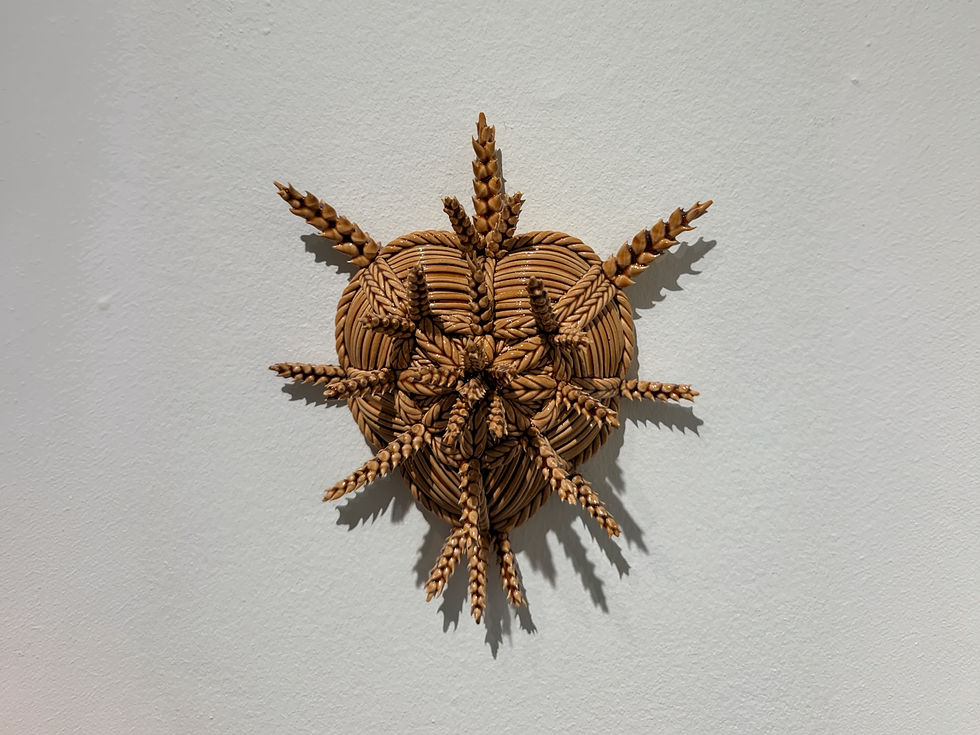
Frieze London, Frieze Masters & PAD: Art, Design and the Culture of Collecting
Text by Valeria Zerbo and Amalia Di Lanno
Photos by Amalia Di Lanno
Every October, London becomes a meeting point for the international art world, bringing together artists, galleries, collectors and curators in a vibrant exchange of ideas, perspectives and visual languages. During London Art Week, Frieze London, Frieze Masters and PAD London offer three distinct yet complementary ways of exploring the evolving relationship between art, history and design.
While Frieze London places contemporary artistic practices and emerging voices at the forefront, Frieze Masters invites visitors to reconsider art history through new perspectives and unexpected connections. PAD London, meanwhile, expands the conversation into the realm of collectible design, where craftsmanship, material experimentation and artistic vision challenge the boundaries between functional objects and works of art.
Beyond the individual identity of each fair, what emerges is a broader reflection on the culture of collecting today: a field shaped not only by market dynamics, but also by research, curatorial choices, visual communication and the personal relationships we establish with objects and images.
Looking across these three platforms means exploring how different artistic languages coexist, intersect and influence one another — and how the experience of looking remains central to the way we understand, interpret and collect art.
Frieze London
At Frieze London 2026, our attention turned to artists exploring the expressive possibilities of materials, from ceramics and textiles to sculpture, painting and experimental assemblages.
Across the fair, we encountered practices that question familiar objects, challenge conventional forms and reflect on memory, identity and the relationship between people and their environments. Here is our selection of works that particularly caught our attention.

Taiwanese artist Steph Huang presented Lili Deli, a playful yet thought-provoking installation with Public Gallery in the Focus section.
Drawing on the visual language of a supermarket, Huang transforms familiar food packaging into unexpected sculptural compositions. In À Table (2026), stacked tins of tuna and tomato paste are accompanied by delicate copper leaves and a pink hand-blown glass shrimp.
The contrast between industrial packaging and fragile craftsmanship invites us to reconsider the systems behind mass-produced food, from global supply chains to the environmental and human costs of consumption. Through humour, material experimentation and familiar objects, Huang reveals the complex stories concealed within the products of everyday life.
Two other sculptural works caught our attention for the ways they bring together nature, memory and human experience.
In her ceramic and bronze sculptures, Apollinaria Broche transforms wildflowers into expressive, almost human figures. Inspired by plants growing along roadsides, her work explores resilience, vulnerability and the voices of women, finding strength in what might otherwise go unnoticed.
Petrit Halilaj approaches memory through a different language. In Si bishri I Arnautëve / Like the tail of Arnauts (2026), delicate lines of brass and hair evoke an animal's tail, confronting historical prejudice and the dehumanising narratives directed at Albanian communities.
Despite their contrasting forms, both artists reveal how sculpture can give physical presence to experiences of fragility, resistance and survival.
Left: Apollinaria Broche - Union Pacific Right: Petrit Halilaj - ChertLüdde
In If Only I Could Raise My Hands (2026), Okiki Akinfe presents a solitary figure whose folded posture conveys a quiet sense of vulnerability and introspection. The restrained composition invites us to consider the relationship between the body, gesture and emotion.
In contrast, Magali Reus transforms the language of everyday objects into an intriguing sculptural composition. Folded surfaces, unexpected textures and fragments of patterned fabric challenge our perception of familiar materials and their functions.
Two distinct artistic languages, both inviting us to look beyond the immediately recognisable.
Left: Okiki Akinfe - Ginny on Frederick Right: Magali Reus - The Approach
In Individual Plant-VR (2025), Zhang Ruyi brings organic forms into dialogue with architectural materials, creating a sculptural presence that feels both natural and constructed.
Ailbhe Ní Bhriain’s Familiar Sun (II) (2026) explores memory through fragmentation and absence. Woven in jacquard, the tapestry transforms an image into a layered reflection on what is preserved, obscured and lost.
On a much smaller scale, Katelyn Eichwald’s Initiation (2026) draws us into an intimate world of candlelight and ritual, where a familiar scene becomes quietly mysterious.

Top left: Zhang Ruyi - Don Gallery Top right: Ailbhe Ní Bhriain - Kerlin Gallery Bottom: Katelyn Eichwald - COB
Holly Hendry brings together unexpected shapes, textures and colours in a playful composition that evokes fragments of the human body, everyday objects and architectural structures. Her work invites us to reconsider the familiar through material experimentation and humour.
Unathi Mkonto, presented by Goodman Gallery, explores the relationship between sculpture, architecture and organic growth. Working with carefully constructed wooden forms, the South African artist imagines architecture as something living and adaptable, shaped by memory, movement and the natural world.
Mkonto's presentation was awarded the Nicoletta Fiorucci Foundation Prize at Frieze London 2026.
Left: Holly Hendry - Josh Lilley Right: Unathi Mkonto - Winner of the Nicoletta Fiorucci Foundation Prize
In her atmospheric paintings, Jill Tate explores the relationship between architecture, light and perception. Working with carefully constructed scale models and a restrained palette of earthy tones, she creates interiors that feel both familiar and strangely suspended in time. Empty of people, these spaces nevertheless suggest a human presence.
In contrast, the presentation by P420 Gallery brings together painting and sculpture in a richly imaginative setting. Figurative and organic forms inhabit a landscape where the familiar takes on unexpected qualities, blurring the boundaries between reality and fiction.
Left: Jill Tate - Seventeen Gallery Right: P420 Gallery installation view
Frieze Masters
At this year's Frieze Masters, we turned our attention to the ceramic works of Lucio Fontana, presented across several galleries.
"The critics said ceramics; I said sculpture." With these words, pronounced in 1939, Lucio Fontana (1899–1968) challenged the traditional distinction between fine and decorative arts, asserting ceramics as an autonomous sculptural language.
At Frieze Masters, five works offered a compelling perspective on his relationship with clay, revealing how material, gesture and space became inseparable elements of his artistic research.

Particularly compelling was Concetto spaziale (1962–63), an iridescent enamelled terracotta plate presented by Larkin Erdmann. Two circular openings interrupt its luminous surface, introducing depth, light and shadow. The familiar ceramic plate becomes an investigation of space, where absence is as significant as material presence.
Central to Fontana's Spatialism was the idea of moving beyond the traditional boundaries of painting and sculpture. By piercing the material, he transformed the surface from a physical limit into an opening towards another dimension. The holes are not simply decorative gestures, but an essential part of the composition, allowing real space to enter the artwork. In this way, the ceramic object becomes an exploration of the relationship between matter, emptiness and infinity.
A dark, egg-shaped Concetto spaziale, punctured by a vertical sequence of holes, further explored the relationship between solid form and emptiness. In another Concetto spaziale (1959), incisions across a glossy black ceramic surface revealed the physical gesture of the artist, transforming marks into sculptural expression.
At Robilant, Madonna col Bambino (1953–54) demonstrated Fontana's expressive, almost Baroque modelling of clay, while La reina de las rosas (Cabeza de Mujer) (1948) combined figuration, floral elements and richly textured surfaces.
Top left: Lucio Fontana - Robilant, Madonna col Bambino. Top right: Lucio Fontana - Ben Brown Fine Arts, Concetto spaziale. Bottom left: Lucio Fontana - Robilant, Concetto spaziale . Bottom right: Lucio Fontana - Robilant, La reina de las rosas (Cabeza de Mujer), 1948
Together, these works reaffirmed ceramics not as a secondary or decorative art, but as a powerful medium through which Fontana explored matter, gesture and space.
PAD London
At Berkeley Square, PAD London brought together historical and contemporary design, decorative arts and collectible objects, exploring the increasingly fluid boundaries between function, craftsmanship and artistic expression.
At Mia Karlova Galerie, Italian designer Tommaso Spinzi's Medusa stools and side tables explored the boundary between functional furniture and sculpture. Inspired by the fluid movement of jellyfish, their rounded forms are carved from solid marble, with the sculptural body and supporting elements conceived as interlocking parts.
Behind them, Valeriya Isyak's Sea Wave introduced a contrasting sense of movement through its intricate porcelain surface. Together, the works created a dialogue between the solidity of natural stone and the organic rhythms of contemporary art.

Elsewhere, Andy Denzler's Hey Saturday Sun 1 (2025) explored the boundaries between representation and abstraction. Through his distinctive technique of dragging and distorting wet oil paint, the Swiss artist created a fragmented image reminiscent of a disrupted film frame, where movement and memory appear suspended within the painted surface.
In contrast, Michela Cattai's Steli (2026) revealed the fluidity of glass through an organic composition of translucent green forms. Its overlapping elements captured and refracted light, transforming a familiar vessel into a sculptural exploration of volume, transparency and movement.
Left: Andy Denzler - Opera Gallery Right: Michela Cattai - PIK'D Gallery
Among the ceramic works that caught our attention was Kaori Kurihara's Dancing Orange (2026), presented by Friedman Benda. Hand-built without preparatory drawings, the sculpture takes shape through an intuitive process. Its vivid orange surface, covered in intricate formations, transforms a familiar natural reference into an unexpected sculptural presence, revealing the expressive possibilities of clay.
A different interpretation of repetition emerged in the work of Yayoi Kusama. A black painting from her celebrated Infinity Nets series explored the idea of infinity through densely repeated gestures, while a golden sculpture of altered footwear introduced her distinctive language of accumulation and bodily forms.
Left: Kaori Kurihara - Friedman Benda Right, background: Yayoi Kusama - Galerie Von Vertes Right, foreground: Yayoi Kusama - Galerie Von Vertes
Maria Vera, presented by 88 Gallery, explores light as a sculptural medium. Through carefully balanced elements, lenses and reflections, her kinetic installations create an interplay between movement, perception and the surrounding space. Light becomes something almost tangible, continually changing the way we experience the work.
In Pensées domestiques, Tiffany Bouelle and Julie Beudin bring together artistic expression and traditional craftsmanship. Their collaboration transforms handcrafted knives into delicate bird-like forms, exploring the invisible responsibilities and emotional demands of motherhood and domestic life.
Left: Maria Vera - 88 Gallery Right: Tiffany Bouelle x Julie Beudin - DUMONTEIL
What emerged from these encounters was a vision of collecting that moves beyond the distinction between art and design. Whether through hand-built ceramics, carved stone, glass or painting, each work expressed a distinctive relationship between artistic vision and material knowledge.
PAD offered a reminder that the significance of a collectible object lies not simply in its rarity or function, but in the ideas, processes and craftsmanship that give it meaning.
Explore More
From London's contemporary art scene to the studios of independent Italian artists and designers, Avant Craft explores the stories, materials and creative practices shaping contemporary art and craft.
Discover the Artists & Designers
Meet the independent artists and designers selected by Avant Craft, and discover the practices, materials and stories behind their work.
Explore the Collection
Discover a curated selection of contemporary Italian art, craft and collectible design by independent makers.
Explore the Collection